

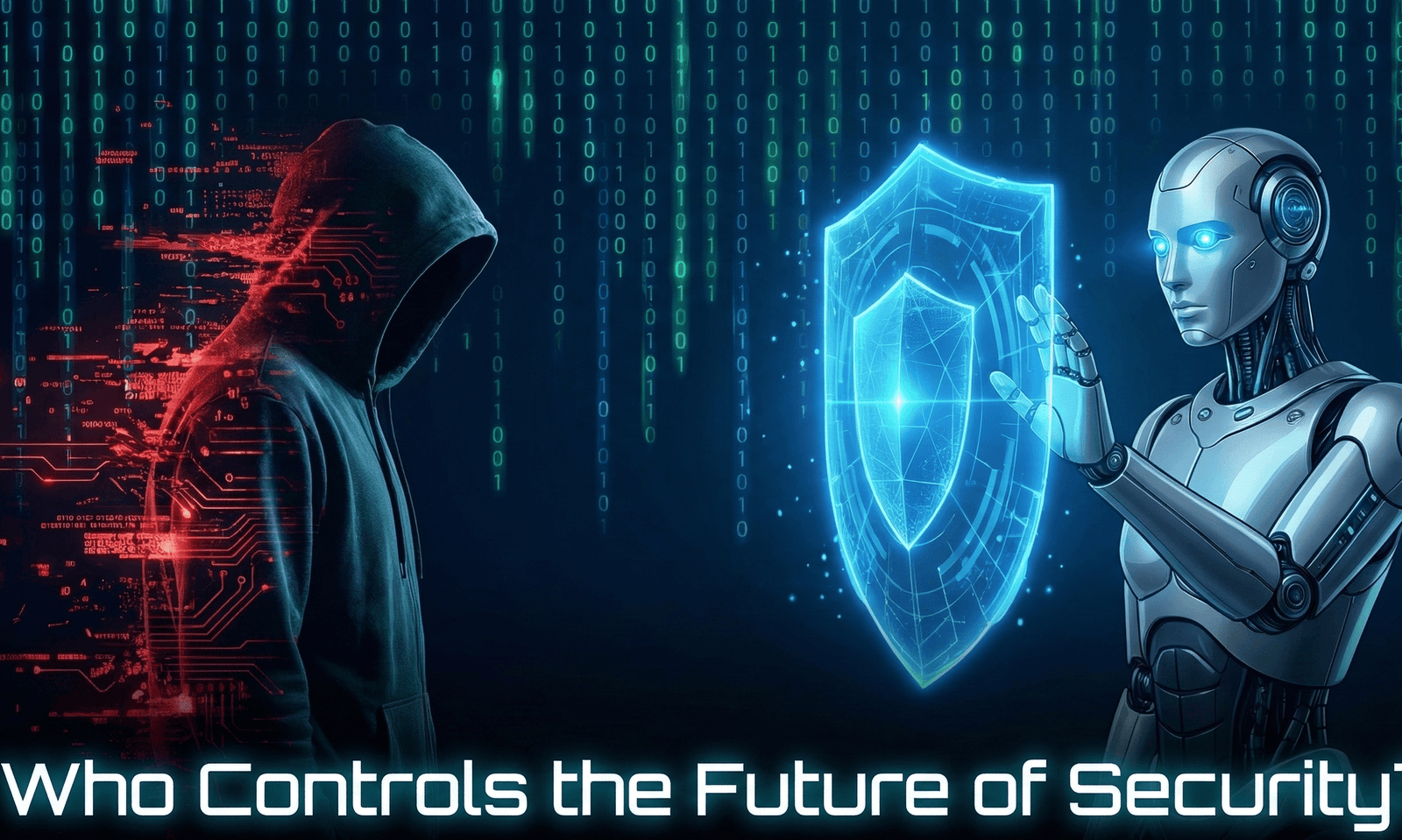
AI in cybersecurity 2026 is not just a trend — it is the defining battleground of the decade. Artificial intelligence is now fighting on both sides of every cyberattack simultaneously: arming threat actors with autonomous, adaptive malware while also giving defenders the speed and scale needed to detect and stop those same threats in real time. If you work in tech, development, or enterprise security, understanding this dual-edged shift is no longer optional.
The numbers make the stakes clear. According to the World Economic Forum’s Global Cybersecurity Outlook 2026, a staggering 94% of security leaders identify AI as the single most significant force reshaping cyber risk today. This guide breaks down exactly what that means — the key trends, the real threats, the defensive frameworks, and the opportunities developers and engineers need to act on right now.
Table of Contents
- AI Is Fighting for Both Sides: The New Reality
- AI-Powered Threats You Need to Know in 2026
- How AI Is Transforming Cyber Defense
- 8 Key AI Cybersecurity Trends Shaping 2026
- The Governance Gap: Adoption Outpacing Protection
- Geopolitics and the New Cyber Battlefield
- What Developers and Engineers Should Do Right Now
- Frequently Asked Questions
1. AI Is Fighting for Both Sides: The New Reality
The cybersecurity industry has always been a cat-and-mouse game between attackers and defenders. But artificial intelligence has fundamentally changed the rules. AI has not just entered the ring — it is fighting for both teams at the same time, expanding where attacks land while simultaneously reshaping the defenses organizations depend on. The result is a threat landscape that is faster, more adaptive, and more unpredictable than anything the industry has faced before.
According to survey data from over 1,800 security professionals, 73% say AI-powered threats are already actively hitting their organizations in 2026. The attack forms range from hyper-personalized phishing campaigns to automated exploit chaining and adaptive malware that learns from failed attempts. At the same time, 77% of organizations now run generative AI tools somewhere in their security stack, making AI both the weapon and the shield in virtually every modern incident.
This is not a future scenario. It is the present state of the field. Understanding how AI is being weaponized and how it is being deployed defensively is the foundational knowledge every developer, engineer, and security professional needs in 2026. As we explored in our post on how AI agents are changing the way we work, the agentic shift is hitting every domain — and cybersecurity is where the stakes are highest.
2. AI-Powered Threats You Need to Know in 2026
Autonomous and Adaptive Malware
The most dangerous new offensive capability is AI-powered malware that can learn from its environment, morph its code, and adapt its tactics after failed attempts. Unlike traditional malware that executes a fixed payload, adaptive malware in 2026 refines its approach with each blocked attempt — customizing payloads per target and adjusting attack traffic to appear legitimate. A Dark Reading poll found that 48% of cybersecurity professionals already believe agentic AI is the top attack vector of 2026.
Hyper-Personalized Phishing at Scale
Traditional phishing required manual effort to craft convincing messages. AI has industrialized this process. In 2026, threat actors deploy large language models to generate highly targeted, contextually accurate phishing content at machine speed — pulling in data from LinkedIn profiles, public posts, and corporate websites to craft messages that are nearly indistinguishable from legitimate communications. The commercialization of AI-assisted cybercrime is accelerating, with cybercrime prompt playbooks now being sold on the dark web as scalable, copy-and-paste attack frameworks.
Agentic Attacks: Autonomous Multi-Stage Operations
As covered in our agentic AI 2026 guide, autonomous AI agents can now plan, execute, and adapt complex tasks over extended periods. On the offensive side, this means attackers can deploy agents that autonomously conduct reconnaissance, exploit vulnerabilities, move laterally through networks, and persist through countermeasures — all without a human operator in the loop. Tasks that previously took an experienced attacker days to coordinate can now run continuously until the mission is complete or the agent is shut down.
GenAI Data Leakage
A major new threat category in 2026 is unintentional data exposure through generative AI tools. The WEF Global Cybersecurity Outlook 2026 identifies data leaks associated with genAI as the leading concern for 34% of respondents — a dramatic rise from 22% in 2025. When employees use AI assistants with sensitive business data, they may inadvertently expose proprietary information, customer records, or intellectual property through improperly configured AI systems or third-party model providers.
3. How AI Is Transforming Cyber Defense
AI is not just an attack tool — it is also the most powerful defensive capability the industry has ever had. The core advantage of AI-driven defense is speed. AI systems can process enormous volumes of data from emails, network traffic, and user behavior simultaneously, identifying early indicators of attack within seconds and dramatically shrinking the dwell time attackers rely on. The shorter the dwell time, the less damage an attack can cause.
Predictive threat modeling is one of the highest-value applications. Modern vulnerability management platforms use global telemetry and exploit trend analysis to predict which security flaws are most likely to be weaponized, allowing teams to prioritize patching and deploy mitigations before attackers strike. Agentic Security Operations Centers (SOCs) take this further, using task-based AI agents to move from simply flagging alerts to actively investigating incidents, analyzing malware behavior, and recommending responses in real time.
AI is also transforming incident forensics. Instead of manually reviewing logs and correlating data over hours or days, AI tools reconstruct an attack timeline in minutes — identifying root causes, tracing lateral movement, and surfacing what needs to be fixed immediately. By 2026, AI-driven forensics is already becoming a standard component of every major SOC’s toolkit.
4. Eight Key AI Cybersecurity Trends Shaping 2026
Trend 1: Platform Consolidation Over Point Solutions
Tool sprawl has become one of the biggest operational drags in enterprise security. In 2026, 93% of organizations prefer platform-based security purchases — up from 87% in 2025. The logic is straightforward: fewer vendors means fewer integration nightmares, fewer alert silos, and better cross-domain threat visibility. When email security, endpoint detection, cloud monitoring, and identity protection all share a unified data layer, threats that slip through the gaps between disconnected tools get caught. Fifty percent of CISOs report their companies are actively consolidating vendor relationships right now.
Trend 2: Zero Trust Architecture Becomes the Default
Static perimeter defenses have failed to keep pace with credential compromise and insider threats. Zero Trust — the security model that verifies every access request regardless of network location — is becoming the default architecture for enterprises in 2026. Identity authentication techniques like passkeys and adaptive multi-factor authentication (MFA), combined with continuous risk scoring, are the backbone of modern Zero Trust implementations. Gartner projects that organizations adopting continuous exposure management frameworks will be three times less likely to experience a breach by 2026.
Trend 3: Non-Human Identity Security (Agentic Identity Management)
As AI agents proliferate across enterprise environments, they create a new and urgent identity management challenge. Autonomous agents operate with their own credentials, permissions, and API keys — often with elevated access. These non-human identities are created at machine speed, making traditional identity governance tools inadequate. Managing the lifecycle, permissions, and behavior of agentic identities is one of the fastest-emerging disciplines in enterprise security, and organizations that ignore it are creating significant blind spots in their attack surface.
Trend 4: AI-Powered SOC Automation
Security Operations Centers are being rebuilt around AI automation. The traditional model — human analysts manually triaging an overwhelming flood of alerts — is being replaced by AI agents that investigate, correlate, and prioritize threats automatically. This shifts the human role from tactical responder to strategic analyst, focusing attention on the highest-severity incidents while AI handles the routine signal processing. The result is faster mean time to respond (MTTR) and dramatically reduced analyst burnout.
Trend 5: Predictive Vulnerability Management
Reactive patching — fixing vulnerabilities after they are publicly disclosed — is increasingly insufficient. In 2026, leading security teams are using AI-driven predictive vulnerability management platforms that analyze global threat telemetry and exploit trends to identify which flaws are likely to be weaponized before they are actively attacked. This gives security teams the window they need to remediate proactively, rather than scrambling after the fact.
Trend 6: Supply Chain Security as a Top Priority
The WEF Global Cybersecurity Outlook 2026 reveals that 65% of large enterprises now identify third-party and supply chain vulnerabilities as their greatest security challenge — up from 54% in 2025. High-profile incidents like the 2025 airport attack that cascaded across European hubs through a shared check-in system have underscored how deeply interconnected digital supply chains can amplify a localized breach into a widespread disaster. Securing the software supply chain is now a board-level priority.
Trend 7: Cloud-Native Continuous Security Monitoring
As organizations continue migrating to the cloud, security strategies must evolve in parallel. In 2026, cloud-native architectures built with continuous authentication and real-time monitoring are replacing perimeter-based models. These environments feed real-time behavioral data into AI systems that can learn, adapt, and adjust protections automatically. The shift is not just technical — it is cultural, requiring security to be designed into infrastructure from the start rather than bolted on afterward.
Trend 8: AI Governance and “AI-Washing” Accountability
As every cybersecurity vendor rushes to label their products as AI-powered, the gap between marketing claims and actual capability is becoming a genuine security risk. Decision-makers who cannot distinguish real AI capability from surface-level branding may deploy inadequate tools while believing they are protected. In 2026, scrutinizing what is actually running under the hood of “AI-powered” security tools is a critical procurement skill.
5. The Governance Gap: Adoption Outpacing Protection
The single most dangerous dynamic in AI cybersecurity today is the widening gap between how fast organizations are deploying AI and how slowly they are building governance frameworks to manage it. The data is striking: 77% of organizations now run generative AI in their security stack, yet only 37% have a formal AI policy in place. Organizations are, in many cases, creating new attack surfaces faster than they can secure them.
The WEF Cybersecurity Outlook 2026 makes the implication clear: AI can improve cybersecurity outcomes, but only when deployed within sound governance frameworks that keep human judgment at the center. Poorly implemented AI solutions introduce new risks — misconfiguration, over-reliance on automation, biased decision-making, and susceptibility to adversarial manipulation. Organizations that treat AI as a checkbox rather than a governed capability are creating exactly the conditions attackers look for.
The organizations best positioned for 2026 are doing several things simultaneously: deploying defensive AI with real governance and human oversight, consolidating tools into coherent platforms, investing in their people’s skills alongside their technology budgets, and partnering with managed service providers to close the gaps they cannot fill internally. The future of cybersecurity belongs to organizations that treat AI as a capability to be governed — not just a product to be purchased.
6. Geopolitics and the New Cyber Battlefield
Geopolitical volatility has moved from the background to the center of enterprise cybersecurity strategy. In 2026, 64% of organizations explicitly account for geopolitically motivated cyberattacks in their risk planning, including state-sponsored espionage, critical infrastructure disruption, and influence operations. Among the world’s largest organizations, 91% have changed their cybersecurity strategies in direct response to geopolitical instability.
AI is both a geopolitical asset and a geopolitical vulnerability. Nations with advanced AI capabilities have significantly greater offensive and defensive cyber power than those without. At the same time, geopolitical fragmentation is disrupting the international information-sharing and cooperation frameworks that the cybersecurity industry has historically depended on. As trust between nations erodes, threat intelligence becomes more siloed — and threat actors benefit from the gaps.
For enterprise developers and security engineers, the practical implication is that geopolitical risk is now a first-class architectural concern. Where data is stored, which cloud providers are used, and how supply chains are structured all carry geopolitical security implications in 2026 that did not exist five years ago. A solid understanding of how AI systems are engineered and deployed becomes increasingly important as these systems sit at the intersection of technical and geopolitical risk.
7. What Developers and Engineers Should Do Right Now
For developers, the AI cybersecurity shift creates both new responsibilities and new opportunities. On the responsibility side, secure-by-design development practices are non-negotiable in 2026. AI agents now perform security reviews that previously required specialized expertise, meaning vulnerabilities in your code will be found — either by your defensive AI or by an attacker’s. Building security into the development lifecycle from the start, rather than treating it as a final QA step, is the baseline expectation for professional software engineering in 2026.
On the opportunity side, the intersection of AI and security is one of the fastest-growing and highest-paying specializations in tech. Skills in threat modeling, AI governance, identity and access management for non-human identities, and security automation are in extreme demand. If you can design systems that are resilient to both traditional attacks and AI-driven adversarial techniques, you are in the top tier of employable engineering talent right now.
For an authoritative deep dive into the threat landscape, the WEF Global Cybersecurity Outlook 2026 is essential reading for any senior developer or architect making technology decisions. It covers the full picture — AI risk, geopolitical threats, supply chain vulnerabilities, and the governance frameworks that separate resilient organizations from vulnerable ones.
Frequently Asked Questions
How is AI being used offensively in cybersecurity in 2026?
Threat actors are using AI to power adaptive malware that learns and morphs after failed attacks, generate hyper-personalized phishing content at scale, automate multi-stage attack sequences via autonomous agents, and sell AI-assisted attack toolkits on the dark web. The core advantage AI gives attackers is speed and adaptability — attacks can now be executed and refined faster than human defenders can manually respond.
What is the biggest AI cybersecurity risk for enterprises in 2026?
The governance gap is the biggest systemic risk. 77% of organizations have deployed AI in their security environments, but only 37% have a formal AI policy. This means most organizations are creating new AI-related attack surfaces faster than they are building controls to protect them. Data leakage through generative AI tools and the proliferation of unmanaged agentic identities are the two most critical specific risks.
What is Zero Trust and why does it matter in 2026?
Zero Trust is a security model that eliminates implicit trust based on network location and instead verifies every access request continuously, regardless of where it originates. In 2026, it matters because the traditional network perimeter has effectively dissolved — workforces are distributed, applications are cloud-hosted, and AI agents operate with their own credentials across multiple systems. Zero Trust is the only architecture that scales to this reality.
How can developers make their applications more secure against AI-powered attacks?
The most effective practices include adopting secure-by-design development principles (security built in from architecture, not added at the end), implementing rigorous input validation to defend against prompt injection and adversarial inputs, using AI-powered static analysis tools during the development cycle, managing API keys and credentials securely with short-lived tokens, and staying current on AI-specific vulnerability classes like model poisoning and adversarial perturbation attacks.
Will AI replace human cybersecurity professionals?
No — AI will fundamentally change what cybersecurity professionals do, not replace them. AI handles alert triage, pattern recognition, automated response, and forensic reconstruction at speeds humans cannot match. Human experts remain essential for strategic decision-making, ethical judgment, novel threat assessment, and the contextual reasoning that AI systems still cannot reliably replicate. The professionals who thrive in 2026 are those who learn to orchestrate AI tools effectively rather than compete with them.