

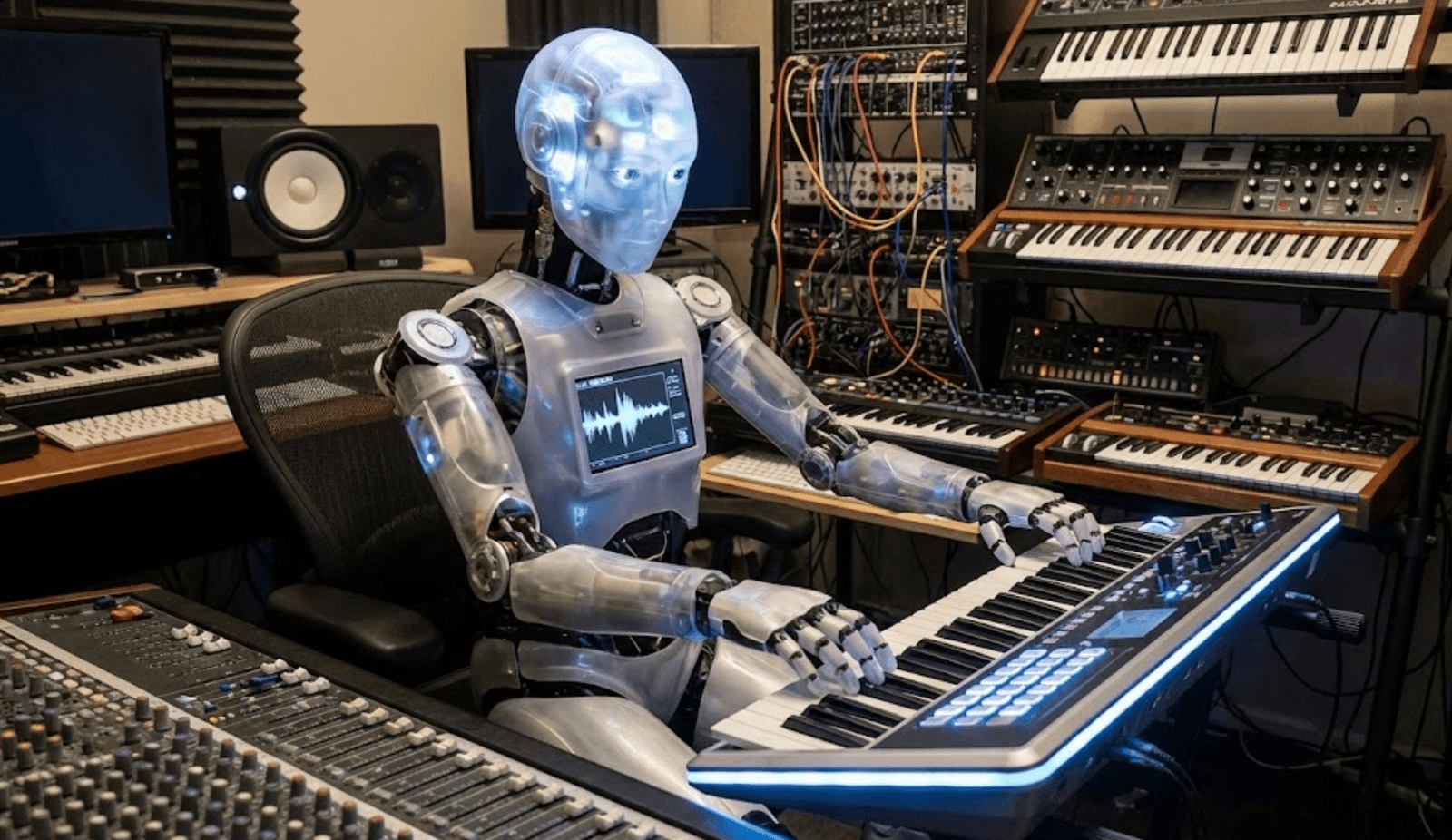
The Rise of AI-Generated Music: Creativity, Copyright & the Future
AI-generated music is no longer a futuristic concept — it’s happening right now. From Spotify playlists quietly filled with AI-composed background tracks to viral songs created entirely by algorithms, artificial intelligence is reshaping what it means to make music. In this article, we dive into the world of AI-generated music, how it works, what it means for artists, and the thorny copyright questions it raises.
AI Music Tools: A New Frontier for Artists
Traditionally, musicians and composers have relied on their own creativity and expertise to produce music. However, AI music tools have opened up a new frontier, allowing artists to explore uncharted territories and experiment with sounds that were previously unimaginable. These tools use complex algorithms and machine learning techniques to analyze vast amounts of data and generate music compositions.
Artists, both established and emerging, are embracing these AI music tools as a means to enhance their creative process. By collaborating with AI systems, they can access a vast library of musical styles and genres, helping them break free from creative constraints and push the boundaries of their art. This mirrors the broader wave of AI transforming industries across the board — from healthcare to transportation.
Experimental artists, in particular, are drawn to the limitless possibilities offered by AI-generated music. They see it as a way to challenge conventional norms and explore unconventional sounds. By incorporating AI into their creative process, they can create music that is truly unique and thought-provoking.
Even mainstream artists are not immune to the allure of AI-generated music. Many have started incorporating AI elements into their compositions, adding a touch of innovation to their familiar style. This fusion of human creativity and AI technology has the potential to create groundbreaking music that resonates with a wider audience.
Popular AI Music Generation Tools in 2024
Several powerful AI music tools have emerged in recent years, making music generation accessible to anyone — no musical training required:
Suno AI can generate full songs with vocals and lyrics from a simple text prompt. Udio creates studio-quality tracks across any genre in seconds. AIVA (Artificial Intelligence Virtual Artist) is widely used for composing orchestral and cinematic music. Soundraw lets creators customize AI-generated music for video content without copyright concerns. These tools are democratizing music production in ways that parallel how streaming platforms democratized music consumption.
Potential Copyright Issues with AI-Generated Music
While AI-generated music opens up exciting possibilities for artists, it also raises important questions about copyright ownership. Who owns the rights to a piece of music created by an AI system? Is it the artist who used the AI tool, the developer of the AI system, or the AI system itself?
The current legal framework surrounding copyright law does not provide clear answers to these questions. Copyright laws were designed to protect the rights of human creators, but they struggle to address the complexities of AI-generated content. As a result, there is a growing debate within the music industry about how to handle copyright issues related to AI-generated music.
Some argue that the artist who used the AI tool should be considered the creator and therefore hold the copyright. Others argue that the AI system itself should be recognized as the creator. The U.S. Copyright Office has begun issuing guidance on AI and copyright, signaling that this legal landscape is actively evolving.
The Debate Over AI’s Role as Creator vs. Tool
The debate over AI’s role as a creator versus a tool is a complex and multifaceted issue. On one hand, proponents argue that AI systems have the ability to generate music that is original and innovative, deserving of recognition as a creator. They believe that by attributing copyright to the AI system, we can acknowledge its contribution to the creative process and ensure fair compensation for its creators.
On the other hand, critics argue that AI systems lack the fundamental qualities that define human creativity. They argue that creativity is a uniquely human trait, driven by emotions, experiences, and a deep understanding of the human condition. While AI systems can mimic human creativity to some extent, they are ultimately limited by their programming and lack true consciousness.
Furthermore, some argue that attributing copyright to AI systems could diminish the value and importance of human creativity and lead to a decrease in demand for human artists as AI systems become more capable of producing music on par with human musicians.
What Does AI-Generated Music Mean for Listeners?
For everyday listeners, AI-generated music may already be part of their daily soundtrack without them even knowing it. Streaming platforms use AI-composed tracks to fill mood-based playlists, background music channels, and lo-fi study streams. While this raises ethical questions about transparency and artist compensation, it also means listeners have access to more music than ever before — tailored precisely to their mood and moment.
Conclusion
The rise of AI-generated music has brought both excitement and uncertainty to the music industry. AI music tools have given artists powerful new creative avenues, but they also raise serious questions about copyright, authenticity, and the future value of human artistry. As AI technology continues to advance, the music industry — and society at large — must find a balance that celebrates both human and AI contributions to the art of sound.