

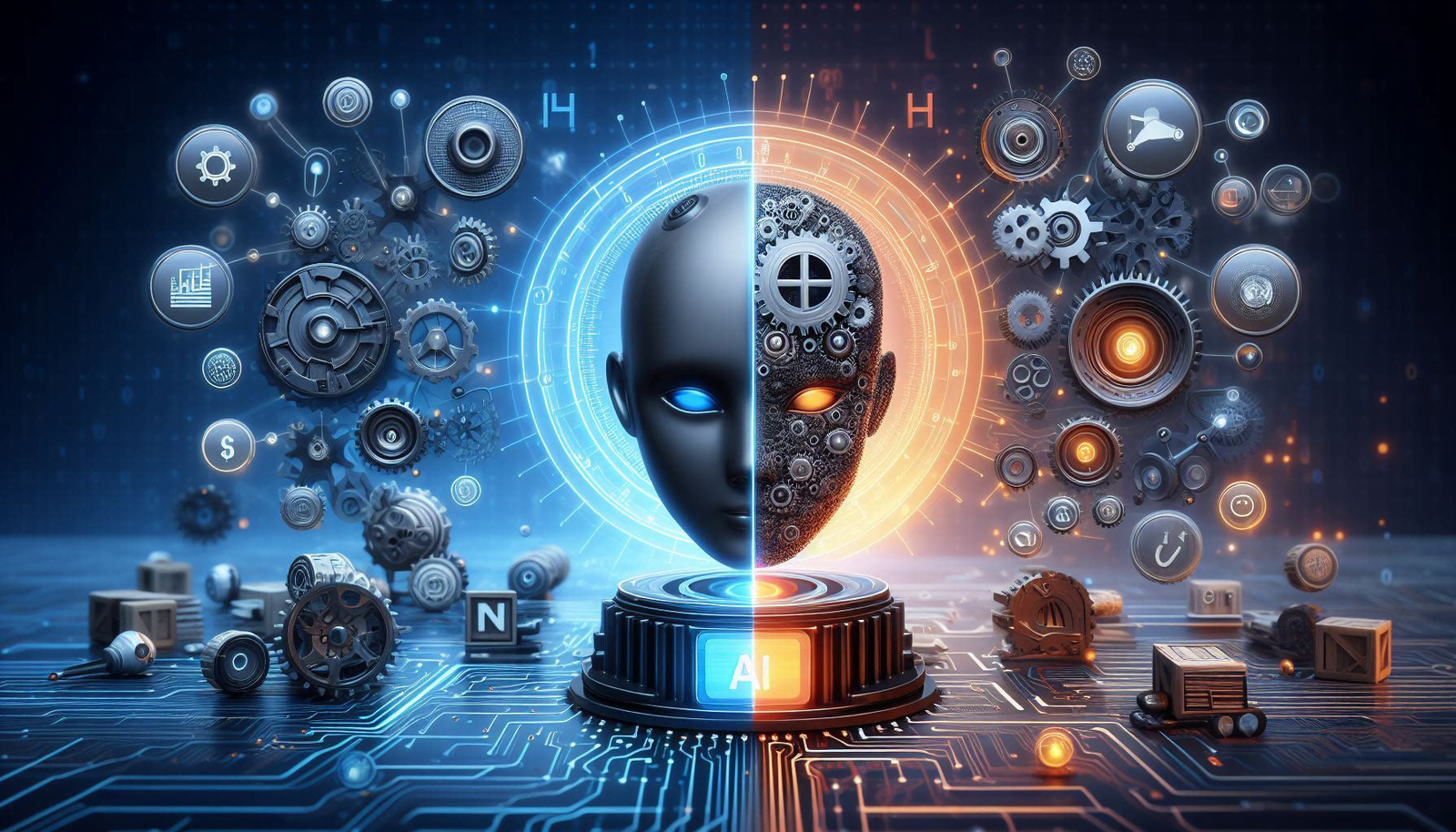
Machine Learning vs AI: Key Differences, Applications & What You Need to Know
Machine learning vs AI — these two terms are used interchangeably in headlines, job listings, and boardroom conversations, yet they refer to distinct concepts with meaningfully different applications. Understanding machine learning vs AI is not just an academic exercise: it shapes how organizations make technology decisions, how developers build systems, and how the public understands the tools increasingly governing their lives. This guide clarifies the relationship, the differences, and the real-world implications of both.
What Is Artificial Intelligence (AI)?

Artificial Intelligence is the broader concept: the field of computer science dedicated to creating systems capable of performing tasks that would normally require human intelligence. These tasks include problem-solving, speech recognition, language interpretation, visual perception, and decision-making. AI is not a single technology — it is an umbrella term encompassing many different approaches and subfields, from rule-based expert systems to modern deep learning models. When people debate machine learning vs AI, it helps to think of AI as the destination and machine learning as one of the most powerful roads to get there.
AI can be classified into different types based on capability. Reactive machines respond to specific inputs with fixed outputs. Limited memory systems — like today’s self-driving cars — use recent data to inform decisions. Theory of mind AI, which could understand human intentions and emotions, remains largely theoretical. Self-aware AI, which would have genuine consciousness, does not yet exist outside of science fiction. The future of artificial intelligence will likely push the boundaries of these categories significantly.
What Is Machine Learning (ML)?

Machine Learning is a subset of AI — a specific approach in which systems learn from data to improve their performance on tasks without being explicitly programmed with rules for every scenario. In traditional programming, a developer writes the rules. In machine learning, the algorithm builds its own rules based on patterns discovered in data. This distinction is at the heart of the machine learning vs AI debate: ML is how modern AI systems become intelligent in practice.
Machine learning comes in three main forms. Supervised learning trains models on labeled data — for example, showing thousands of labeled images of cats and dogs so the model learns to distinguish between them. Unsupervised learning identifies hidden patterns in unlabeled data, such as customer segmentation in marketing. Reinforcement learning trains agents through trial and error, rewarding desired behaviors — the approach behind game-playing AI like DeepMind’s AlphaGo and robotic control systems. Each type of ML suited different problem contexts and real-world applications.
Machine Learning vs AI: The Key Differences

When comparing machine learning vs AI directly, the most important distinction is scope. AI is the goal — creating intelligent machine behavior. Machine learning is a method — one of the primary techniques used to achieve that goal. All machine learning is AI, but not all AI is machine learning. Early AI systems used hand-coded rules and logic trees that had nothing to do with machine learning; modern AI systems rely heavily on ML because it proved far more capable at handling the complexity and variability of real-world data.
A second key difference in machine learning vs AI is adaptability. Traditional AI systems (rule-based) are static — they only do what they’re programmed to do. Machine learning systems are dynamic — they improve with more data and experience. This adaptability is what made ML the dominant approach in AI development during the 2010s and 2020s, powering everything from spam filters to language translation to cancer detection. Understanding this distinction helps clarify why the AI trends of 2024 were so heavily ML-driven.
Real-World Applications of Machine Learning vs AI

In practice, machine learning vs AI manifested across virtually every industry. Businesses used broader AI frameworks for customer service chatbots, facial recognition systems, and strategic decision-support tools. Machine learning specifically powered financial forecasting, product recommendation engines (like those on Netflix and Amazon), fraud detection systems, and medical imaging analysis. In healthcare, ML algorithms detected cancer markers in scans with accuracy rivaling specialist physicians — a development explored in our article on AI in healthcare.
Autonomous vehicles illustrated the machine learning vs AI distinction in action. The overall goal — a self-driving car — was an AI challenge. The specific capability of recognizing pedestrians, reading road signs, and predicting other drivers’ behavior was achieved through machine learning, particularly deep learning applied to camera and sensor data. Both AI and ML worked together, each contributing distinct layers of capability to the final system.
Challenges and Ethical Considerations in Machine Learning vs AI

The ethical challenges in machine learning vs AI were substantial and real. Data privacy was a persistent concern: both ML and AI systems relied on vast amounts of personal data, creating risks of misuse, breach, or exploitation. Bias in machine learning systems proved particularly problematic because ML models learned from historical data that often reflected existing social inequalities — producing discriminatory outcomes in hiring, lending, and criminal justice that were difficult to detect and contest. The broader ethical landscape is explored in depth in our piece on the ethics of artificial intelligence.
The impact on employment was another dimension of the machine learning vs AI ethical debate. As ML-powered automation displaced routine cognitive and manual tasks, the need for workforce reskilling became urgent. Organizations, governments, and educators faced pressure to prepare workers for an economy increasingly shaped by AI and ML capabilities. These were not abstract future concerns — they were active workforce challenges by 2024. For a closer look at how to build for this future, see our beginner’s guide to Android Studio for Mac as one practical starting point for learning development skills.
Conclusion
The machine learning vs AI distinction matters because clarity drives better decisions — about which tools to build, which problems to tackle, and which risks to manage. AI is the broad ambition; machine learning is the primary engine making it real in today’s world. Both technologies continued to evolve rapidly in 2024, reshaping industries and raising important ethical questions that demanded serious, sustained attention. Whether you’re a developer, business leader, or curious reader, understanding machine learning vs AI is now foundational knowledge for navigating the technology landscape.
FAQs: Machine Learning vs AI
What is the simplest way to differentiate machine learning vs AI?
AI is the broader concept of machines performing tasks that require human-like intelligence. Machine learning is a specific subset of AI in which systems learn from data to improve performance on specific tasks without being explicitly programmed for every scenario.
Can machine learning exist without artificial intelligence?
No. Machine learning is a subset of AI and relies on AI’s broader principles and goals. ML is one of the primary methods used to achieve AI — it cannot exist independently of the AI field that gave rise to it.
What are common misconceptions about machine learning vs AI?
The most common misconception is that AI and ML are interchangeable. Another is that either technology can solve any problem without limitation. In reality, both have specific use cases, data requirements, and limitations that must be understood before deployment.
How can I tell if a system uses machine learning or just programmed rules?
Systems using machine learning exhibit adaptive, improving behavior over time as they process more data. Rule-based systems operate on fixed, static logic that does not change unless manually reprogrammed. If a system gets better at its task without a developer rewriting it, it’s likely using ML.
What are the main ethical concerns with machine learning vs AI in industries?
Key concerns include data privacy risks from large-scale personal data processing, algorithmic bias that perpetuates social inequalities, lack of transparency in how decisions are made, and the displacement of workers by AI and ML-powered automation.