

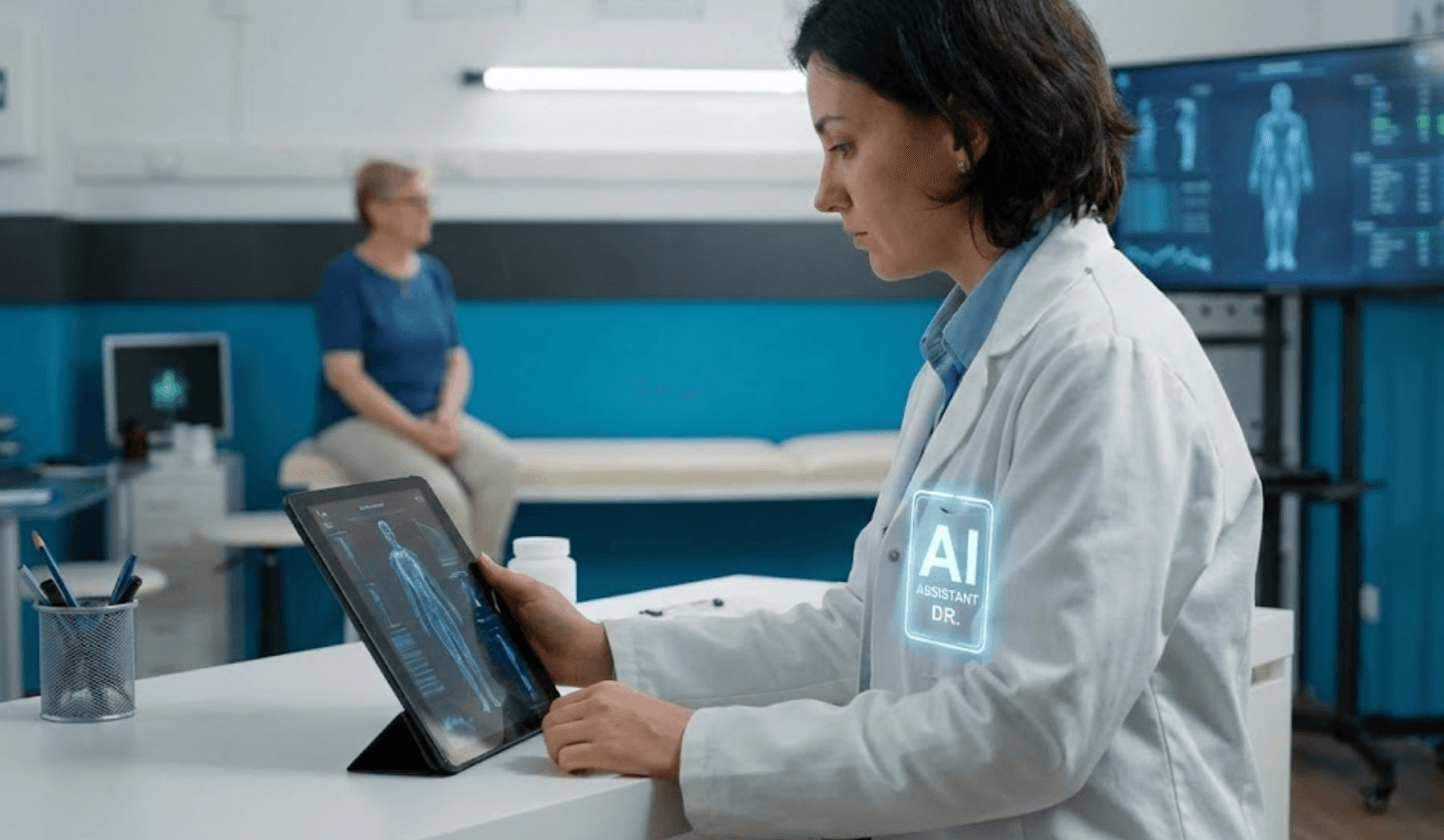
Artificial Intelligence in Healthcare: Revolutionizing Patient Care
Artificial intelligence in healthcare has moved from experimental concept to clinical reality, fundamentally reshaping how doctors diagnose conditions, how hospitals operate, and how patients are treated. From AI-powered imaging tools that detect cancer earlier than human radiologists to robotic surgical systems performing minimally invasive procedures with remarkable precision, artificial intelligence in healthcare has delivered some of the most consequential technological advances in modern medicine. This article explores the core applications, key benefits, major challenges, and the future of AI in healthcare.
What Is Artificial Intelligence in Healthcare?
Artificial intelligence in healthcare refers to systems and algorithms that replicate human cognition to execute complex clinical and administrative tasks — continuously improving their performance through accumulated data. These AI-driven tools deliver rapid, data-led decisions that often surpass the speed and accuracy of human analysis alone. Unlike traditional software that follows fixed rules, AI systems learn from patterns in data, enabling them to recognize disease markers, predict patient deterioration, and personalize treatment plans at scale.
How AI Evolved in Medicine
AI’s journey in healthcare stretches back to the 1960s with the first automated laboratory information systems. Over the following decades, advances in computing power and data management enabled increasingly sophisticated applications — from expert diagnostic systems in the 1980s to today’s deep learning models capable of reading MRI scans, predicting sepsis, and personalizing cancer treatment. The broader transformation mirrors trends described in our look at how AI, VR, and IoT are reshaping our lives.
Core Applications of Artificial Intelligence in Healthcare
Diagnostics: Boosting Speed and Accuracy
One of the most impactful uses of artificial intelligence in healthcare has been in diagnostics. AI algorithms analyzed complex imaging data — from X-rays to MRIs to CT scans — vastly improving the speed and accuracy of diagnosing conditions like cancers, bone fractures, and cardiovascular disease. In pathology, AI boosted the precision of tissue assessments and identified disease markers frequently missed by human analysis alone. Predictive analytics tools went further still, processing vast patient datasets to flag potential health issues before they became critical — enabling truly proactive and preventive care strategies.
Treatment: Personalized and Precision Medicine
Artificial intelligence in healthcare transformed treatment from a one-size-fits-all model to a precision approach. In genomics, AI accelerated drug discovery and enabled treatments customized to individual genetic profiles, enhancing effectiveness while reducing adverse effects. AI-powered surgical robots enhanced procedural precision, reduced operation times, and shortened patient recovery durations significantly. Automated treatment management systems allowed for continuous patient monitoring and dynamic, real-time adjustments to care plans — improving outcomes across a wide range of conditions.
Hospital Operations: Streamlining Management
Beyond the clinic, AI improved scheduling, staff allocation, and bed management — contributing to measurably more efficient hospital workflows and shorter patient wait times. AI streamlined administrative tasks, improved accuracy in medical billing, and reduced the documentation burden on clinical staff. Automated processes cut operational costs and optimized resource distribution across healthcare facilities, freeing clinical teams to focus on direct patient care.
The Advantages of Artificial Intelligence in Healthcare
Improved Patient Outcomes: Reduced error rates and personalized treatment plans boosted the quality and consistency of medical care across conditions and settings.
Enhanced Operational Efficiency: AI accelerated healthcare process automation, leading to better resource management, shorter wait times, and reduced administrative overhead across facilities.
Extended Accessibility: Artificial intelligence in healthcare extended the reach of advanced diagnostics and personalized treatment to underserved and remote regions, helping to democratize access to quality care globally.
Challenges and Ethical Implications
Data Security: As cyber threats intensified, safeguarding sensitive patient data became critical to maintaining trust in AI-enabled systems. Healthcare was among the most targeted sectors for cyberattacks, making robust security infrastructure non-negotiable for any AI deployment.
Algorithmic Bias: AI algorithms trained on non-representative datasets risked producing biased outcomes, disadvantaging minority patient groups. Eliminating this bias was — and remains — a priority for responsible artificial intelligence in healthcare.
Regulatory Challenges: Gaining clinical approval for AI tools required significant coordination between technology developers, healthcare teams, and regulatory bodies. The WHO has published guidance on ethical AI use in health as frameworks worldwide continue to mature.
The Future of Artificial Intelligence in Healthcare
The future of artificial intelligence in healthcare points toward even deeper integration across the care continuum. Advanced neural networks and foundation models are enabling AI to tackle increasingly complex health conditions, with the potential to reshape preventive care and early intervention at population scale. Successful expansion will require standardizing health data practices, improving system interoperability between providers, and securing coordinated support from regulatory bodies worldwide.
Ultimately, the advancement of artificial intelligence in healthcare depends on genuine collaboration between technology developers, clinicians, policymakers, and patients — a theme central to the broader conversation about the future of artificial intelligence across all sectors.
Conclusion
Artificial intelligence in healthcare has already reshaped essential aspects of medicine — from diagnostics and surgery to hospital operations and patient management. While challenges around data privacy, algorithmic bias, and regulation remain real, the responsible adoption of AI points toward a genuinely revolutionary future for global health. As AI continues to mature, its role in healthcare will only deepen, making it one of the most consequential and promising applications of technology in human history.
Frequently Asked Questions (FAQ)
What is artificial intelligence in healthcare?
It involves leveraging algorithms and machine learning to analyze health data, enhancing clinical decision-making and operational efficiency across medical settings.
How does artificial intelligence in healthcare improve diagnostics?
AI improves diagnostic accuracy through superior imaging analysis, pattern recognition, and predictive analytics — enabling faster and more precise medical evaluations than traditional methods.
Can artificial intelligence in healthcare improve patient outcomes?
Yes. AI supports tailored treatment plans and real-time health monitoring, which has been shown to significantly advance patient care results in clinical settings worldwide.
What are the main ethical concerns with AI in healthcare?
Key concerns include robust data privacy protections, preventing biased outcomes across diverse patient populations, and maintaining transparency in AI-driven clinical decisions.
How is data privacy protected in AI healthcare systems?
Through comprehensive security protocols, continuous audits, encryption standards, and strict adherence to health data regulations such as HIPAA in the US and GDPR in Europe.