

Blockchain Technology Explained: How It Works & Why It Matters
Blockchain technology is one of the most transformative innovations of the 21st century — and yet, most people still don’t fully understand how it works. If you’ve heard the term “blockchain” but aren’t sure what it means or why it matters, you’re in the right place. In this guide, we’ll break down blockchain technology in plain English, covering what it is, how it works, and why it’s reshaping industries from finance to healthcare.
What is Blockchain Technology?
At its core, blockchain is a decentralized digital ledger that records transactions across multiple computers. Unlike traditional centralized systems, where a single authority controls the database, blockchain operates on a network of computers called nodes. Each node has a copy of the entire blockchain, ensuring transparency and security.
Think of blockchain as a giant spreadsheet that is constantly being updated and verified by a network of participants. Every transaction that occurs on the blockchain is grouped together in a “block” and added to the chain in a sequential order. This chain of blocks forms the blockchain — hence the name.
How Does Blockchain Work?
Now that we have a basic understanding of what blockchain is, let’s take a closer look at how it works. There are three key components that form the foundation of blockchain technology: decentralization, transparency, and security.
1. Decentralization
Decentralization is one of the fundamental principles of blockchain. Instead of relying on a central authority, such as a bank or government, blockchain operates on a peer-to-peer network. This means that no single entity has control over the entire system, making it more resistant to censorship and manipulation.
Each node in the network maintains a copy of the blockchain, and they work together to validate and verify transactions. This distributed nature ensures that no single point of failure exists, making the system highly secure and reliable.
2. Transparency
Transparency is another key feature of blockchain technology. Every transaction that occurs on the blockchain is recorded in a public ledger, which can be accessed and viewed by anyone. This transparency eliminates the need for trust in intermediaries, as the entire transaction history is open for scrutiny.
For example, if you want to transfer money to a friend, instead of relying on a bank to facilitate the transaction, you can use a blockchain-based cryptocurrency like Bitcoin. The transaction details — including the sender, recipient, and amount — are recorded on the blockchain and can be verified by anyone at any time.
3. Security
Security is paramount in the world of blockchain. The decentralized nature of the network, combined with cryptographic algorithms, ensures that transactions are secure and tamper-proof. Each block in the blockchain contains a unique identifier called a hash, which is generated using complex mathematical calculations.
Once a block is added to the blockchain, altering its contents becomes nearly impossible. If someone tries to modify a block, the change will be immediately detected by the other nodes in the network, as the hash of the block will no longer match the stored value. This makes blockchain an ideal solution for applications that require high levels of security, such as financial transactions and supply chain management.
Real-World Applications of Blockchain Technology
Blockchain is far more than just the backbone of cryptocurrencies like Bitcoin and Ethereum. Its potential applications span across numerous industries:
Finance & Banking
Blockchain enables faster, cheaper, and more secure cross-border payments. Banks and fintech companies are leveraging blockchain to reduce fraud, streamline settlements, and cut out expensive intermediaries. Decentralized Finance (DeFi) platforms are taking this further by offering lending, borrowing, and investing — all without a traditional bank.
Healthcare
In healthcare, blockchain can securely store and share patient records across hospitals and clinics while maintaining privacy. It also helps combat counterfeit drugs by tracking pharmaceutical supply chains from manufacturer to patient. This aligns closely with the broader impact of AI and technology on healthcare that is reshaping the industry.
Supply Chain Management
Companies like Walmart and Maersk are already using blockchain to track goods from origin to shelf. This level of transparency reduces fraud, minimizes errors, and improves accountability across complex global supply chains.
Voting & Governance
Blockchain-based voting systems could make elections more transparent, secure, and tamper-proof — reducing the risk of fraud and making it easier for people to vote remotely without compromising integrity.
Challenges and Limitations of Blockchain
While blockchain technology is powerful, it’s not without its challenges. Scalability remains a significant concern — as a blockchain grows, processing transactions quickly can become slower and more energy-intensive. Bitcoin’s proof-of-work mechanism, for instance, consumes enormous amounts of electricity. Additionally, the regulatory landscape around blockchain and cryptocurrencies is still evolving, which creates uncertainty for businesses looking to adopt the technology. Interoperability between different blockchain networks is also a work in progress, limiting seamless communication across platforms.
The Future of Blockchain Technology
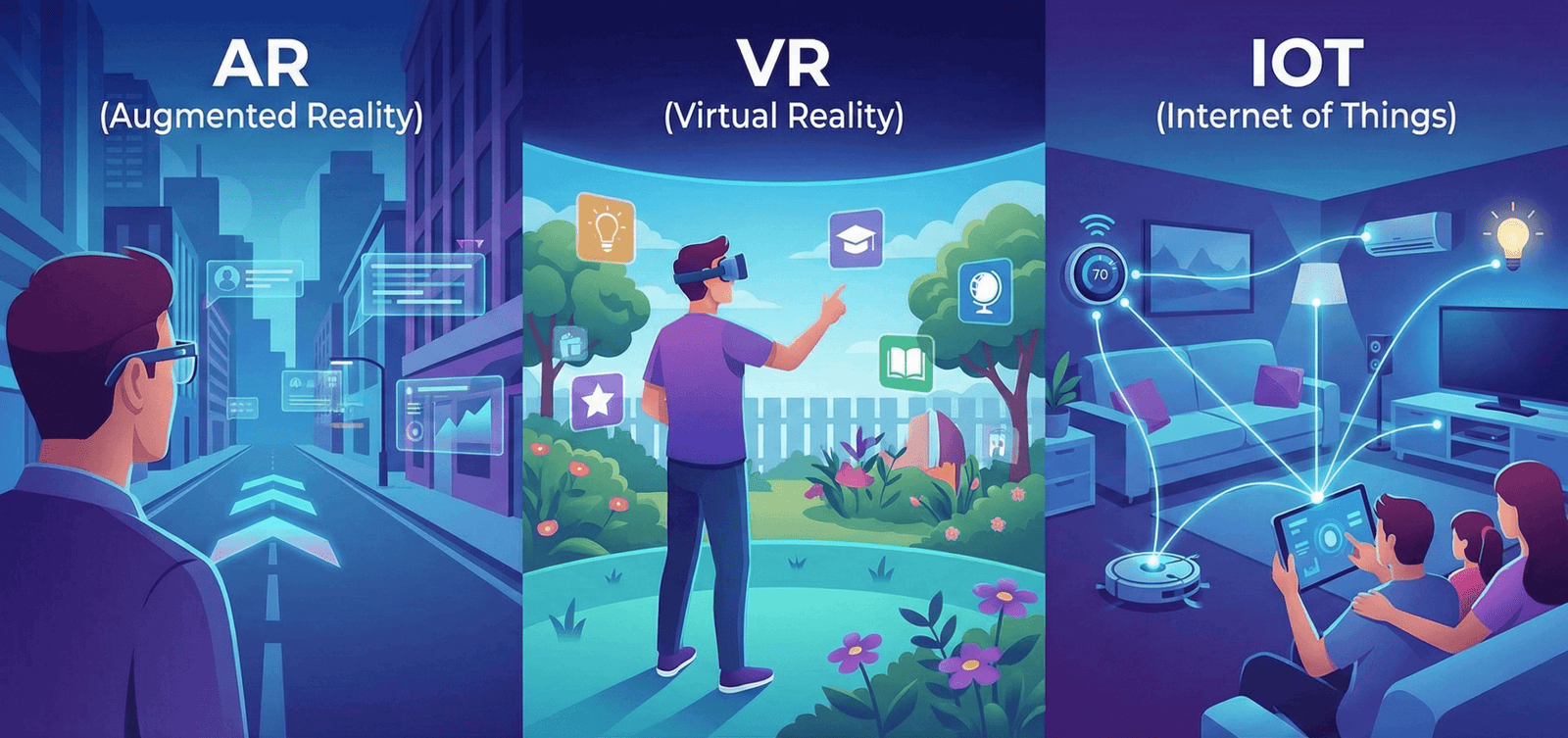
Blockchain technology is still in its early stages, but its trajectory is clear. As scalability solutions like Ethereum 2.0 and Layer 2 protocols mature, blockchain will become faster and more energy-efficient. Combined with the rise of Web3 — a decentralized internet built on blockchain — we are heading toward a world where individuals have greater ownership over their data and digital assets. This evolution is closely connected to the broader wave of emerging technologies reshaping our world, including AI, VR, and IoT.
Conclusion
Blockchain technology has the potential to revolutionize industries by providing a secure, transparent, and decentralized platform for transactions and data management. From finance and healthcare to supply chains and governance, the use cases are vast and growing. Whether you’re a business owner, developer, or simply a curious tech enthusiast, understanding blockchain technology is essential to navigating the digital future ahead.